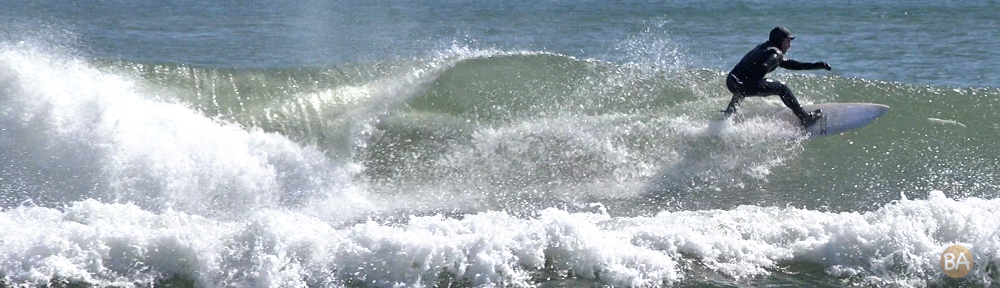
February 2012 Meeting Notes

The February meeting explored the age old problem of representing ever moving time with but a single still image. The meeting was very well attended, and six members presented work for the review.

Dainis presented a number of different techniques, and I found this multiple exposure to be the most effective.
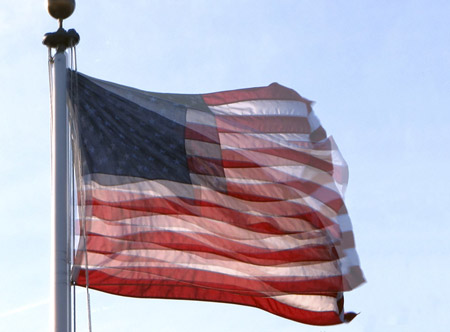
american flag - dainis
Everyone is familiar with flags waving in the wind. As the wind increases, the gentle waving turns into a manic flapping. Back in the day, multiple exposures were an all too common error with manually operated cameras. Now a days, it is almost impossible to even make a multiple exposure with an electronic camera, and the effect must be created in after capture in Photoshop. This picture seems to create the impression of a flag beating in a strong wind more effectively than either a stop action or a motion blur, does it not?

Marilyn presented a variety of ways to indicate action, but I found this series of a butterfly drawing nectar from a flower to be the most instructive.
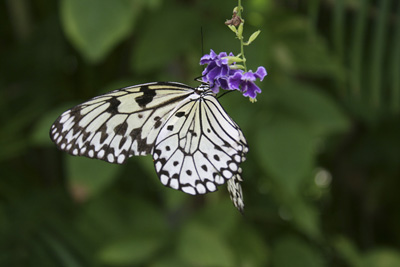
butterfly

This close up stop action shot is wonderfully revealing of detail on a beautiful flower and butterfly, showing a marvelous pattern that might not be seen at all by the naked eye.

On the other hand, is not this blurred shot more illustrative of a live butterfly as it darts and flits from flower to flower in nature? Has anyone discarded this kind of photo with barely a glance, perhaps prematurely?
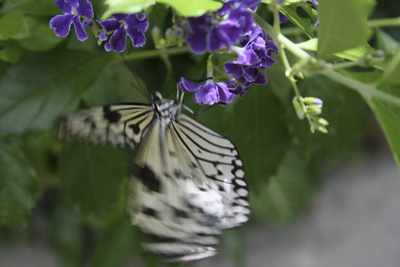
butterfly2
Bridg presented several interesting ways of showing time. One was a stop action video that compressed a year of construction into a few minutes of video in a way that was more illustrative of the job than either a still shot or a conventional video.

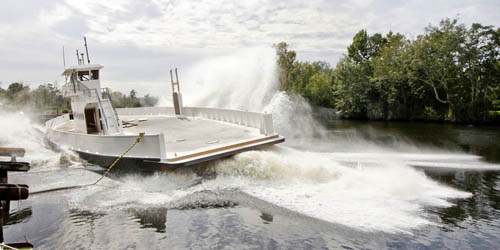
He also showed what can happen when everything is just right in a high speed shot. The most dramatic moment in the launching of a ship is when it leaves the ways and splashes into the usually still harbor waters with a tremendous splash. This strong diagonal composition, and perfect timing capture the moment perfectly, showing a moment in time with more impact than a fleeting frame in a moving image.Ship splash
Yvette used an entirely different technique to define a moment: soft focus.vows by yvette
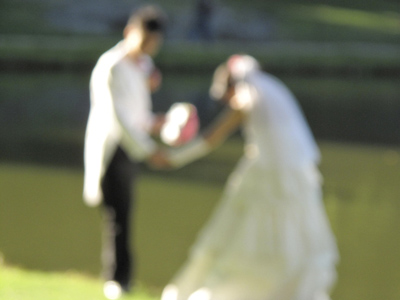
By eliminating all normal “photographic” detail from this photograph, the more significant body language comes to the fore, making this image more painterly, and this special moment more memorable.


Perfect stillness is harder to portray than may be imagined. We use the expression “still life” to describe a scene that has been consciously composed to allow a careful portrayal, either by painter or photographer.

But when shooting natural scenes, the there is a difference between simply showing a scene with no movement in it, and the indication of that perfect, quiet, stillness that so rarely occurs.Still pondPerfectly flat water, water as flat as a mirror, actually occurs in nature rather infrequently. In this shot that perfectly calm water may
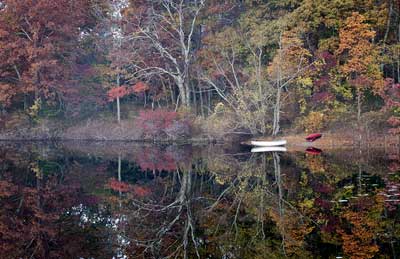
promote the sense memory of a particularly silent moment on a still and chilly autumnal morning.

THE ASSIGNMENT:

Back in the day, photography was entirely a black and white affair. From it’s earliest days in the 1830’s until the wide use of Kodachrome after World War II, there was very little color in photography, and none at all available to the general public.

From the 1950’s to the seventies, the 35mm color slide was the standard way of taking color pictures, until the ubiquitous one hour photo lab brought wallet size color prints to the masses.

But it was not until the rise of digital photography and the Epson inkjet printer that amateurs and professionals alike were able to make their own color prints at a reasonable cost in their own studios.

The result was that color, glorious color, became the linqua franca of virtually every photographer, as “free” digital “film” and inexpensive inkjet printers allowed everyman to own a “digital color darkroom”.

Or did it, really?

The classic black and white photographs certainly did not lose their appeal and many photographers continued to work entirely or partially in black and white, producing strong and memorable images.

(Some of the best black and white photography can be seen in Hollywood movies from the golden era, and stills from the period by such masters as Karsh, Hurrell and Bull,)

For our next assignment we are going to study the effect and impact of color and black and white on contemporary photography.

Members are requested to bring in images taken in both color and black and white, to illustrate and explore which technique is more appropriate, and when.

As always, kindly bring your work in a thumb drive, trying to make the images as 8×10 .jpgs at 72dpi. If anyone is unsure how to do this exactly, please ask, and we will give a quick demonstration. There’s really nothing to it.

– Jonathan Morse
Feb. Meeting Topic & Assignment

Time… is what keeps everything from happening at once“. – Ray Cummings, 1922

In every photograph time is evident in two ways, one is shutter speed,  but much more importantly, every photograph must show the effect of never ending time itself on the scene. That is what we are going to examine now: how time influences and is represented  in various ways in still photography.

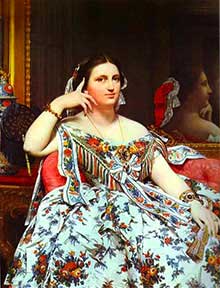
We have previously seen that still photography is the direct descendent  of traditional painting which normally portrayed what we have come to call “still life’s”, that is to say a scene in which nothing is  presumed to be moving. This suited traditional painting, as the painting took a long time to create , especially compared to taking a photograph of the scene. This was particularly true of  portraits in which the “sitter” is portrayed in a relaxed and immobile pose, even if rendered in photographic detail such as the portrait of M. Bertin by Ingres which we have previously examined.
Painters did attempt to portray moving objects, such as horses, or running men, but these attempts relied on educated guesses, as the human eye lacks the ability to stop action faster that about a twentieth of a second.

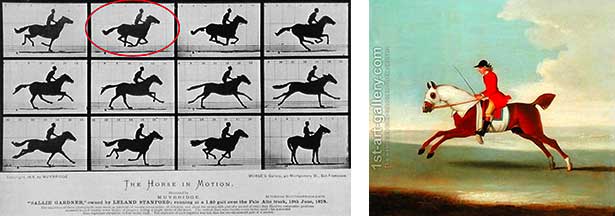
From the earliest days of photography, the instantaneity of photography was appreciated as a way to “see the unseen moment”. Perhaps the most famous early example of this is Muybridge’s time lapse photographs of a running horse, which, among other things, proved once and for all that all four  legs do, in fact, leave the ground at the same time, tucked under the horse , something that was previously believed to be impossible.

accurate time-lapse photos versus painting of a running horse showing incorrect placement of the horse’s legs.

Time-lapse photos showing accurate movement versus painting of a running horse showing incorrect placement of the horse’s legs.

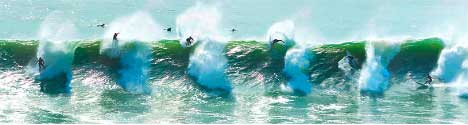
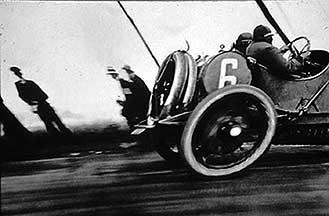
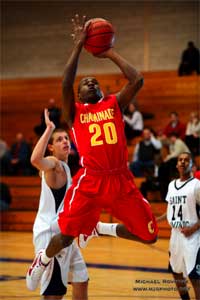
This approach, although the photographs are combined in a much more sophisticated way, is still in use, as we can see in the surfing photographs of Blair Seagram, where movement through the waves is shown by placing the same surfer at several different positions in the same photograph to show his trajectory through the water. The image is created from several photographs by stitching them together in Photoshop.Passage of time seen in multiple photos stitched togetherThere are many other techniques that photographers use to indicate motion. One of the earliest techniques, which is still in use today, is the use of panning. That is to say to follow the trajectory of the moving object, say a racing car, with the camera. The result is that the background is rendered with “motion blur” and the object is much sharper, thus imparting the feeling of speed, producing a fairly accurate analogue of the way the human eye sees a fast moving object, concentrating on the object, and nothing else. Early examples of this technique often were made with large format cameras and relatively slow moving focal plan shutters, which as they moved a slit from the top of the frame to the bottom, created a forward diagonal to the image, which greatly increased the impression of speed, even though this image did not correspond to any thing seen by the human eye. This look was then adopted by illustrators to show speed, even if the background was no longer blurred.As the technical elements of action photography continued their relentless development, several factors made it possible to actually stop action and eliminate the need to pan the camera. These were increased film speeds, faster lenses, faster and smaller focal plane shutters, and high power strobes that enabled exposures as fast as a eight thousandths of a second. This perfectly stopped action became to imply action, even though there is no apparent movement.The photo might be said to show the artifacts of action such as a boiling wake left behind a sail boat frozen in time, tells us how fast the boat was moving when the shot was taken, or the ball player shown frozen in mid air, even thoug we can not really see him like that.In fact, we are susceptible to the artifacts of speed in real life: who among us has not believed that our train was starting to leave the station, when in reality we were simply fooled by the train on the next platform, that had started to move instead of us.

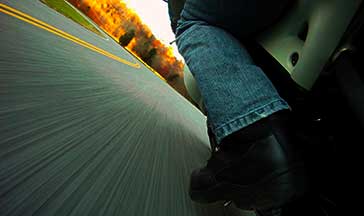
Another type of motion blur is axial motion blur which is created by pointing a moving camera in the direction of motion, instead a fixed camera moving across the picture plan, it to give the feeling of motion. This effect can also be created by zooming the lens rapidly while using a slow shutter speed.Perhaps no form of photography is more related to classical painting than portraiture. Painted portraits almost invariably show the subject, the sitter as they are known, in repose. Obviously this facilitated the process of the painting which could be quite protracted. It is said that Ingres’s portrait of Madame Moitessier, finished in 1858, was actually begun in 1844! Despite the fact that a modern portrait takes a mere fraction of a second, the sitter is almost always shown in repose. One wonders if this is simply following tradition, or if the face in repose is more revealing, or if some other factor is at play.

Madame Moitessier by Ingres

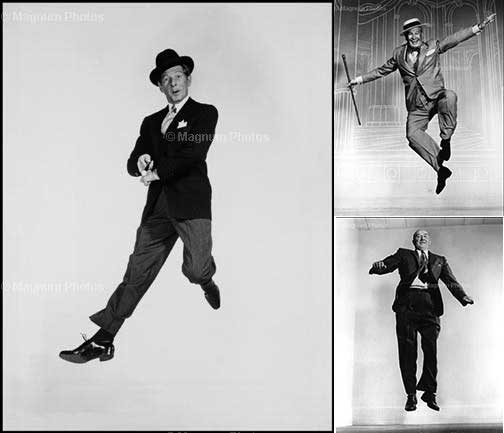
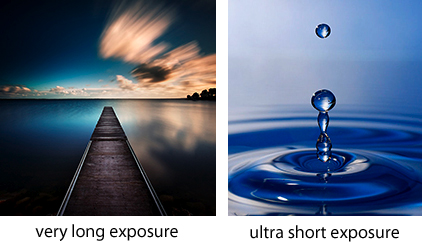
On the other hand, the advent of faster camera did lead to experiments in what might be called portraits in motion. In fact, Phillipe Halsman developed the technique of “jump shots” in which the sitter becomes a jumper. He observed: “When you ask a person to jump, his attention is mostly directed toward the act of jumping and the mask falls so that the real person appears. This proved to be much more accurate in the case of real dancers like Danny Kaye or Maurice Chavlier, and much less so in the case of the president of US Steel. Are we surprised?Another way of interpreting the passage of time was to use an extremely long, or extremely short exposure to either show the effect of a long passage of time, or at the opposite end of the spectrum, an incredible short instant, as in this high speed shot of a drop of water, shows once again an instant in time invisible to the naked eye.For February’s exercise, we are going to consider the matter of illustrating motion, or stillness, and members are requested to bring in some photographs that illustrate an appropriate technique, or perhaps several techniques on the same subject in an effort to explore which might be the most effective.

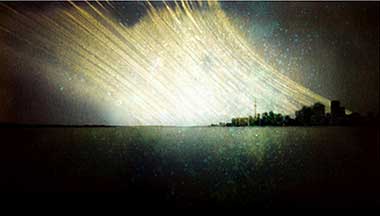
Finally we will close with this very interesting exposure of the Toronto skyline which took a entire year to expose, with a camera with a very small pinhole for a lens. The lens was left open all year, and the film, actually paper, was exposed to so much light, it was not developed, but scanned, which erased the image, but not before the scan was complete. This compelling image shows that for the inventive and creative photographer, there is always the possibility of creating original and fascinating way to illustrate the passage of time in a single static frame.

One year time lapse of Toronto skyline